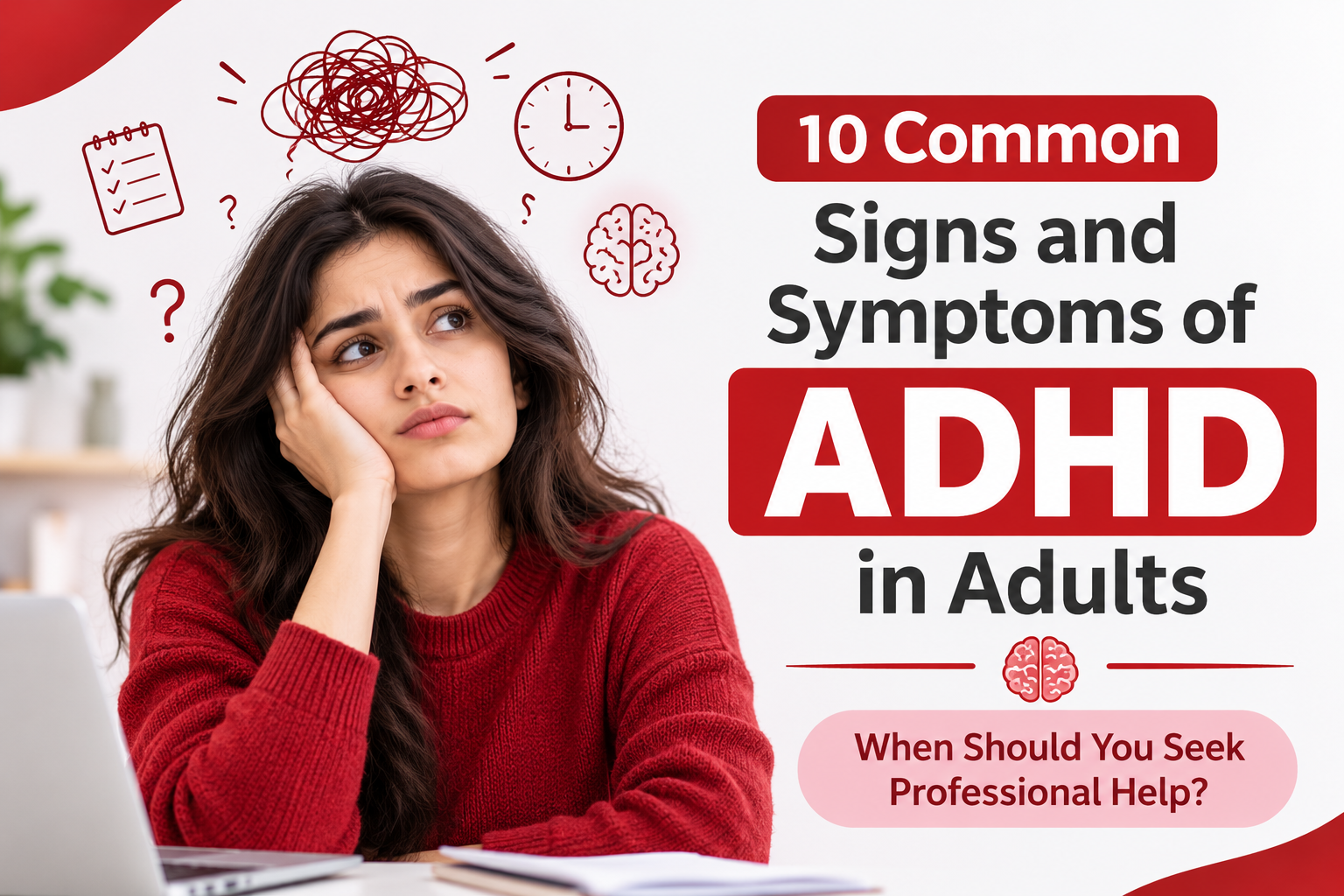
Attention-Deficit/Hyperactivity Disorder (ADHD) is a neurodevelopmental condition that can affect both children and adults. While ADHD is often associated with childhood, many people continue to experience its symptoms well into adulthood. In some cases, adults may not recognise the signs until they begin facing difficulties with work, relationships, time management, or everyday responsibilities.
Adults with ADHD may struggle with concentration, forgetfulness, impulsive decisions, restlessness, and completing routine tasks. These challenges are not necessarily a reflection of laziness or a lack of motivation. ADHD can affect how the brain manages attention, organisation, and self-regulation.
Understanding the common signs of ADHD in adults is an important first step towards seeking appropriate support. If these difficulties are affecting your daily life, consulting a qualified psychiatrist can help you understand your symptoms and explore suitable treatment options.
If you are searching for Adult ADHD treatment in Chandigarh, recognising these symptoms can help you decide when to seek professional guidance.
What Is Adult ADHD?
Adult ADHD is a neurodevelopmental condition characterised by persistent patterns of inattention, hyperactivity, and impulsivity that can interfere with everyday functioning.
Although ADHD symptoms often begin during childhood, they may continue into adulthood. Some adults may receive a diagnosis later in life because their symptoms were overlooked or misunderstood when they were younger.
ADHD can affect different areas of adult life, including:
- Maintaining concentration at work or while studying.
- Managing time and completing daily responsibilities.
- Remembering appointments and important tasks.
- Controlling impulsive reactions or decisions.
- Maintaining personal and professional relationships.
- Organising thoughts, schedules, and activities.
Not every adult with ADHD experiences the same symptoms. Some primarily struggle with attention, while others experience restlessness or impulsive behaviour. Many experience a combination of these difficulties.
10 Common Signs and Symptoms of ADHD in Adults
Recognising adult ADHD symptoms can sometimes be difficult because they may overlap with everyday stress, anxiety, sleep difficulties, or other mental health concerns.
Here are ten common signs that may indicate the need for a professional assessment.
1. Difficulty Maintaining Focus and Concentration
One of the most recognised symptoms of adult ADHD is difficulty sustaining attention.
Adults may find it challenging to concentrate during meetings, conversations, reading, or routine work activities. Even when they genuinely want to focus, their attention may shift towards unrelated thoughts, sounds, or distractions.
Common experiences include:
- Losing track of conversations.
- Getting distracted while completing important tasks.
- Struggling to concentrate on lengthy documents.
- Frequently switching between different activities.
- Finding it difficult to finish tasks without interruptions.
These difficulties can affect professional performance and everyday responsibilities.
2. Frequent Forgetfulness
Forgetting appointments, misplacing belongings, or overlooking important responsibilities can be frustrating for adults experiencing ADHD symptoms.
For example, someone may regularly forget where they placed their phone, miss scheduled meetings, or remember an important task only after its deadline has passed.
Common examples include:
- Forgetting appointments or deadlines.
- Misplacing keys, wallets, or documents.
- Forgetting instructions shortly after receiving them.
- Overlooking household responsibilities.
- Needing frequent reminders to complete everyday tasks.
Persistent forgetfulness can create challenges at work and in personal relationships.
3. Difficulty Managing Time
Adults with ADHD may struggle to estimate how long a task will take or organise their schedules effectively.
They may underestimate the time required to complete assignments, arrive late despite making an effort to be punctual, or find themselves rushing to finish tasks at the last minute.
This can result in:
- Frequently arriving late.
- Missing deadlines.
- Difficulty prioritising responsibilities.
- Spending too much time on less important activities.
- Struggling to follow a consistent daily routine.
Time-management difficulties can sometimes be mistaken for carelessness, even when the individual is making a genuine effort.
4. Procrastination and Difficulty Starting Tasks
Another common experience among adults with ADHD is difficulty getting started on tasks.
Even simple responsibilities, such as replying to emails, completing paperwork, organising a room, or preparing for an appointment, may feel overwhelming.
A person may understand exactly what needs to be done but still struggle to take the first step.
This can happen because of difficulties with task initiation, planning, prioritisation, and executive functioning.
Procrastination can lead to unnecessary stress, unfinished responsibilities, and feelings of frustration.
5. Restlessness and Feeling Constantly On the Go
Hyperactivity in adults does not always look like running around or being physically overactive.
Instead, it may appear as internal restlessness or difficulty relaxing.
Adults experiencing this symptom may:
- Feel uncomfortable sitting still for extended periods.
- Frequently move their hands or feet.
- Feel the need to stay occupied.
- Find it difficult to relax during quiet activities.
- Experience a constant sense of mental restlessness.
Some adults describe feeling as though their minds are always active, even when their bodies are resting.
6. Impulsive Decisions and Reactions
Impulsivity is another important feature of ADHD.
Adults may sometimes act or speak before fully considering the consequences of their actions.
Examples include:
- Interrupting others during conversations.
- Making sudden purchases without planning.
- Taking unnecessary risks.
- Responding emotionally without thinking.
- Making quick decisions that they later regret.
Impulsivity can sometimes affect finances, relationships, workplace communication, and personal decision-making.
7. Difficulty Organising Tasks and Responsibilities
Planning and organisation can be particularly challenging for adults with ADHD.
They may struggle to manage multiple responsibilities, keep their workspace organised, or decide which task needs attention first.
For example, an individual may start several projects simultaneously but find it difficult to complete any of them.
Other signs include:
- Frequently changing plans.
- Having difficulty maintaining organised schedules.
- Forgetting important steps in a task.
- Struggling to manage multiple deadlines.
- Feeling overwhelmed by everyday responsibilities.
These challenges may affect both professional and personal life.
8. Difficulty Listening During Conversations
Adults with ADHD may sometimes appear distracted or inattentive during conversations, even when they genuinely care about what the other person is saying.
Their attention may drift, causing them to miss important details or lose track of discussions.
This may result in:
- Asking people to repeat information.
- Forgetting details from previous conversations.
- Becoming distracted while someone is speaking.
- Finding lengthy conversations difficult to follow.
- Accidentally interrupting others.
These experiences can sometimes create misunderstandings in personal and professional relationships.
9. Emotional Dysregulation and Frustration
Some adults with ADHD experience difficulties managing emotional responses.
They may feel frustrated quickly, become overwhelmed by minor setbacks, or find it difficult to calm down after an upsetting experience.
Possible experiences include:
- Becoming irritated easily.
- Feeling overwhelmed by everyday challenges.
- Experiencing intense emotional reactions.
- Having difficulty managing disappointment.
- Struggling to recover from stressful situations.
Emotional regulation difficulties can affect relationships, confidence, and overall well-being. However, these experiences are not exclusive to ADHD and should be understood in the context of a proper assessment.
10. Difficulty Completing Tasks and Following Through
Starting a task is sometimes easier than finishing it for adults with ADHD.
They may begin working enthusiastically but lose interest, become distracted, or move towards something else before completing the original responsibility.
For example, someone may start organising their home, become distracted by another activity, and leave several unfinished tasks behind.
This pattern can affect:
- Workplace assignments.
- Household responsibilities.
- Personal projects.
- Academic activities.
- Long-term goals.
Repeated difficulty following through can lead to frustration and reduced confidence.
What Are the Different Types of ADHD in Adults?
ADHD is generally described through three presentations based on the pattern of symptoms.
- Predominantly Inattentive Presentation
Adults with this presentation primarily experience difficulties with attention, concentration, organisation, and forgetfulness.
They may struggle to follow instructions, complete tasks, or maintain focus during conversations.
- Predominantly Hyperactive-Impulsive Presentation
This presentation involves symptoms such as restlessness, excessive talking, interrupting others, and difficulty waiting.
In adults, hyperactivity may appear more like internal restlessness than obvious physical activity.
- Combined Presentation
Adults with combined presentation experience significant symptoms of both inattention and hyperactivity-impulsivity.
The presentation and severity of symptoms can vary between individuals.
What Causes ADHD in Adults?
ADHD does not have one single known cause. Research suggests that several genetic, neurological, and developmental factors may contribute to the condition.
Some factors associated with ADHD include:
- Genetics: ADHD often runs in families, suggesting a strong genetic contribution.
- Brain development: Differences in brain development and functioning may influence attention and self-regulation.
- Neurotransmitters: Brain chemical systems involved in attention and executive functioning may play a role.
- Developmental factors: Certain prenatal and early-life factors may contribute to the likelihood of developing ADHD.
It is important to understand that ADHD is not caused simply by poor parenting, laziness, or a lack of discipline.
How Is ADHD Diagnosed in Adults?
If you recognise several of these symptoms in yourself, it does not automatically mean you have ADHD. Similar difficulties can also occur with anxiety, depression, sleep disorders, and other health conditions.
A proper assessment by a qualified mental health professional is important.
An adult ADHD assessment may involve:
- Clinical Interview
The psychiatrist discusses your current difficulties, personal history, daily functioning, and symptoms.
- Childhood and Developmental History
ADHD symptoms must have been present during childhood, even if the condition was not diagnosed at that time.
- Symptom Assessment
Standardised rating scales and screening tools may be used to understand the pattern and severity of symptoms.
- Evaluation of Other Conditions
The psychiatrist may assess whether anxiety, depression, sleep problems, or other conditions could explain or contribute to the difficulties.
- Diagnosis and Treatment Planning
After evaluating the available information, the psychiatrist can discuss the diagnosis, if appropriate, and recommend a personalised treatment approach.
What Are the Treatment Options for Adult ADHD?
Adult ADHD treatment depends on the individual’s symptoms, daily challenges, medical history, and overall needs.
A personalised treatment plan may include the following approaches.
1. Medication Management
Certain medications can help manage ADHD symptoms by improving attention and reducing impulsivity or hyperactivity.
Medication decisions should always be made by a qualified psychiatrist after an appropriate assessment.
2. Cognitive Behavioural Therapy (CBT)
CBT can help adults develop practical strategies for managing everyday challenges.
It may focus on:
- Improving time management.
- Developing organisational skills.
- Managing negative thought patterns.
- Reducing procrastination.
- Building healthier routines.
3. Behavioural Strategies
Practical strategies can help adults manage daily responsibilities more effectively.
These may include maintaining structured schedules, breaking larger tasks into smaller steps, setting reminders, and reducing unnecessary distractions.
4. Lifestyle and Routine Management
Healthy daily habits can support overall well-being and help individuals manage everyday challenges.
Helpful habits may include:
- Maintaining a consistent sleep schedule.
- Engaging in regular physical activity.
- Following a balanced diet.
- Using planners and reminders.
- Creating an organised working environment.
These approaches can complement professional treatment but should not replace appropriate clinical care.
When Should You Consult a Psychiatrist for ADHD?
Consider seeking professional guidance if attention, organisation, impulsivity, or restlessness consistently interfere with your everyday life.
You may benefit from an assessment if:
- You frequently struggle to complete important responsibilities.
- Your concentration difficulties affect your work or studies.
- You regularly forget appointments and deadlines.
- You experience persistent organisational difficulties.
- Your symptoms are affecting personal relationships.
- You have experienced these challenges since childhood.
If you are searching online for a Psychiatrist Near Me, consider choosing a qualified psychiatrist who can assess adult ADHD and discuss appropriate treatment options.
Early professional evaluation can help you understand the difficulties you are experiencing and identify suitable ways to manage them.
Adult ADHD Treatment in Chandigarh: Getting the Right Professional Support
Living with untreated or unrecognised ADHD symptoms can sometimes make everyday responsibilities more challenging. However, understanding your symptoms and seeking professional guidance can be an important step towards better management.
If you are looking for Adult ADHD treatment in Chandigarh, consulting an experienced psychiatrist can help you explore assessment and treatment options based on your individual needs.
Professional support may help you understand your attention difficulties, improve daily functioning, and develop practical strategies for managing ADHD symptoms.
At Vardaan Clinics, individuals seeking mental health support can explore professional psychiatric consultation and discuss their concerns with a qualified mental health professional.
Do not hesitate to seek guidance if persistent attention or organisational difficulties are affecting your quality of life.
Frequently Asked Questions About ADHD in Adults
1. What are the most common symptoms of ADHD in adults?
Common symptoms include difficulty concentrating, forgetfulness, procrastination, restlessness, impulsive behaviour, poor time management, and difficulty completing tasks. Symptoms can vary from person to person.
2. Can ADHD develop for the first time in adulthood?
ADHD is a neurodevelopmental condition, and its symptoms must have been present during childhood. However, some people are not diagnosed until adulthood because their earlier symptoms were overlooked or misunderstood.
3. Can adults with ADHD live a normal life?
Yes. Many adults with ADHD manage their personal and professional responsibilities successfully. Appropriate treatment, practical strategies, and professional support can help improve everyday functioning.
4. Is ADHD treatable in adults?
ADHD can be managed through personalised treatment approaches, which may include medication, psychological therapy, behavioural strategies, and lifestyle support.
5. Which doctor should I consult for adult ADHD?
A qualified psychiatrist can assess adult ADHD symptoms, evaluate other possible conditions, confirm a diagnosis where appropriate, and recommend suitable treatment options.
6. When should I seek Adult ADHD treatment in Chandigarh?
Consider consulting a psychiatrist if persistent difficulties with concentration, organisation, impulsivity, or restlessness are affecting your work, relationships, or daily activities.
7. Can anxiety and ADHD occur together?
Yes. ADHD and anxiety can occur together. A professional assessment can help identify both conditions and guide an appropriate treatment plan.
Conclusion
Adult ADHD is more than occasional forgetfulness or difficulty concentrating. It can affect how individuals organise their thoughts, manage responsibilities, control impulses, and navigate everyday situations.
Recognising the common symptoms is an important first step towards understanding the condition. If these challenges are persistent and affecting your quality of life, professional evaluation can help you explore the right support.
With appropriate assessment and personalised care, adults with ADHD can develop effective strategies to manage their symptoms and improve their daily functioning.
Looking for professional support? Explore Adult ADHD treatment in Chandigarh and consult a qualified psychiatrist to discuss your concerns.